
How to Get Cleveland County Court Records
Begin with the basics. You want the case number, the court division, the document, and the date. Have those before you contact anyone. A focused request lets the Clerk of Superior Court pull an existing public record without guesswork. The eCourts Portal gives you a public Case Summary, visible Case Events, and hearing details. It also links to documents on file. Treat it as a finding tool, not the clerk's full certified file.
- Use the case number, party information, court division, and a document date when available to identify the Cleveland record.
- Check the Portal Case Summary for visible history, hearing information, or a public document link.
- For inspection or a copy, contact or visit the Cleveland Clerk of Superior Court and ask for the public record by its specific description.
- State whether an ordinary copy or a certified copy is needed, then confirm availability, turnaround, payment method, and local cost with the clerk.
- Use the court reporter or digital-recording process for a transcript or requested audio, because those are not Portal printouts.
The Cleveland clerk posts no fee schedule for ordinary or certified copies, so ask about the charge before placing a large order or requesting certification. For the bigger picture, North Carolina's public-record request information separates Judicial Branch administrative records from county case records.
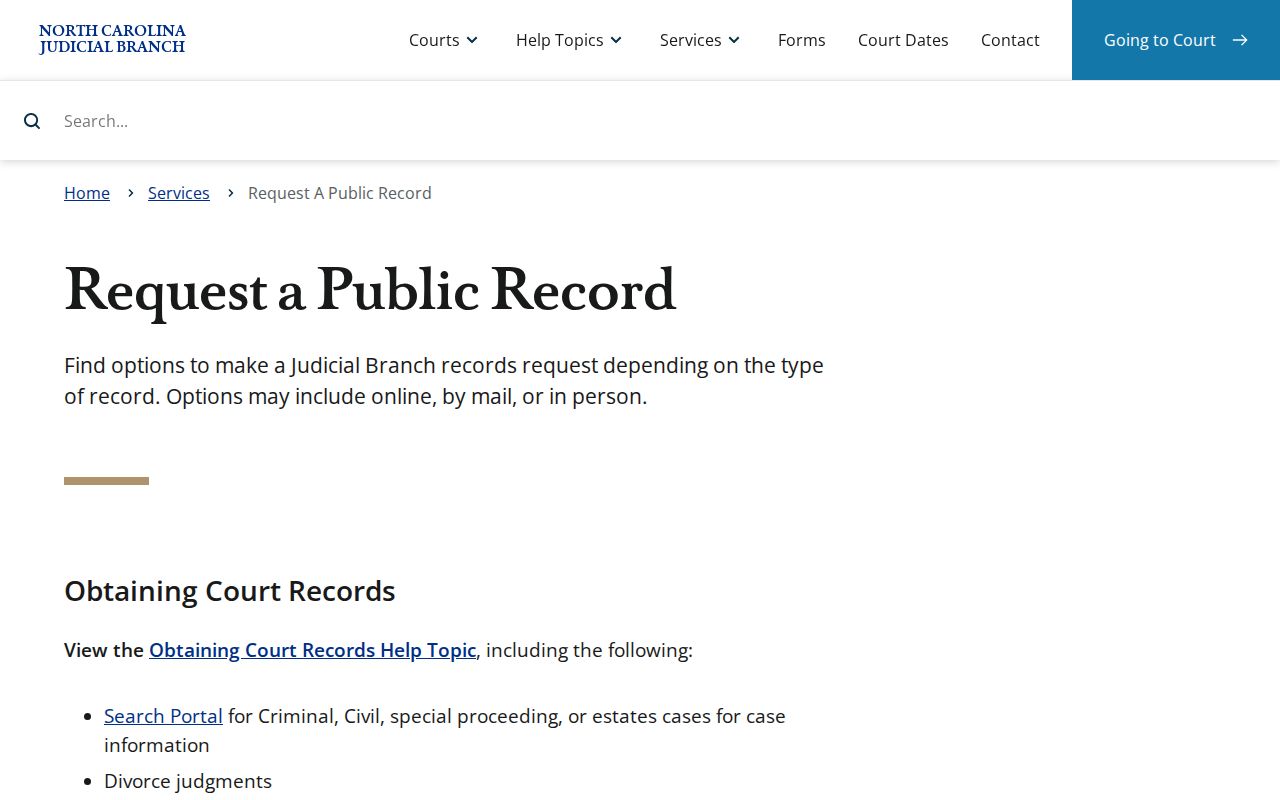
That split matters in practice. A court-file request goes to the Cleveland clerk, while Judicial Branch administrative records follow the separate NCAOC route.
Cleveland County Clerk Court Record Route
North Carolina runs one unified clerk system. Every county has a Clerk of Superior Court. In Cleveland County, that office keeps the Superior Court, District Court, and Magistrate case files. It also holds dockets, indexes, and other trial-court records. The eCourts Portal adds a statewide search layer on top. It does not replace the local docket and file custody. A Portal entry may look thin. You may need a public terminal, or you may want an authenticated copy. In those cases, the clerk is still the right stop.
Cleveland Clerk of Superior Court
100 Justice Place
Shelby, NC 28150
704-476-7800
Court calendars work differently from dockets. District 39 staff coordinate settings, but signed physical orders and the official case record come from the Clerk of Superior Court.
Types of Court Records
There is no single product called a court record. The Case Summary is the running index. The public file behind it may hold pleadings, motions, affidavits, orders, and judgments. A certified copy is a clerk-authenticated version of one of those records. Transcripts and audio recordings move through separate court-reporter or recording channels.
- Case Summary or visible docket history through Portal
- Filed public documents from a Portal link or the clerk case file
- Certified copies from the Cleveland Clerk of Superior Court
- Hearing transcripts through the designated reporter or technician
- Audio through the court’s applicable audio-request process
Name what you want before you ask. A request for a "record" should not skip the case number, item, or date. Without them, the clerk is left guessing about what exists. The clerk must also guess which office can supply it.
The same record can also surface through more than one channel. It still may not be the same thing. A Portal event shows that a filing, hearing, or disposition appears in the court's online view. It is not the document itself. Sometimes you need the underlying public record. Sometimes you need a clerk-certified copy or a transcript from the reporter process. Ask for that directly.
Cleveland County Court Record Choices
The online Case Summary and the official file serve different jobs. Portal Smart Search finds the case number and shows public history fast. The clerk's public terminal and file route take over in other cases. An available public document may not be online. Certification is a clerk function, never a Portal one.
| Record sought | First source | Official route |
|---|---|---|
| Case Summary or visible history | Portal Smart Search | Clerk terminal or file if the online view is incomplete. |
| Filed public document | Portal document link if offered | Cleveland Clerk case file. |
| Certified copy | Clerk after the item is identified | Cleveland Clerk of Superior Court. |
| Transcript or audio | Court-reporter or recording-process inquiry | Designated reporter, technician, or clerk-directed form. |
Note: a public Portal view helps you identify a case, but it does not certify authenticity or prove that every original filing is available online.
What a Court Record Contains
A full Cleveland court file often holds more than a Case Summary displays. The public portion can include the case number, pleadings, motions, signed orders, judgments, and the record of filed or entered events. Some documents may not be online. Others are restricted or open only through clerk-file inspection. So identify the exact public record you need. The clerk cannot build a new compilation for you.
| Case number | The identifier that connects a request to one Cleveland case. |
|---|---|
| Case Events | The running procedural history of available filings, hearings, and actions. |
| Pleadings and motions | Underlying filed documents when public and available. |
| Orders and judgments | Court directions or adjudications in the case file. |
| Hearing information | Scheduled settings and related details where publicly visible. |
| Financial information | Available court-side financial fields in the Case Summary. |
Cleveland County Court Records Terminal Access
State court-record guidance names public terminals as a route for criminal, civil, special-proceeding, and estate records where applicable. That matters in a common situation. A Portal search may find the case. It still will not show the public item you need. The terminal and clerk-file route keep your request tied to Cleveland County. That county holds the original record. A statewide online result is not complete on its own.
The clerk's office can explain which public material is available. Staff can also explain how its copy or certification process works. Staff cannot tell you what an entry legally means or give legal advice. Bring the case number, court division, document type, and relevant date. The visit goes faster.
For in-person or telephone record requests, contact the Clerk of Superior Court. The address is 100 Justice Place, Shelby, NC 28150. The phone is 704-476-7800. The address and phone point to the local custodian of the court docket and files. They are not a promise that every file or item is public. Access still turns on the particular record and the applicable court rules.
Certified Copies and Fees
A plain copy and a certified copy are not the same thing. The clerk authenticates a certified copy, when clerk procedure allows it. No Cleveland-specific price exists for either type. Don't borrow a rate from some other county. North Carolina's general copy law lays out the principles. Meanwhile the Cleveland clerk sets the local charge and process for the court record you actually need.
| Item | Fee finding | What to confirm |
|---|---|---|
| Portal case search | Publicly available search | Whether the needed public document is visible online. |
| Ordinary Cleveland copy | Local fee not located in official sources | Copy cost and any search or handling charge. |
| Certified Cleveland copy | Local fee not located in official sources | Availability, certification charge, and turnaround. |
| Transcript | Reporter fees vary | Reporter or technician process and price. |
Cleveland County Court Record Audio Routes
Transcripts come from the official court reporter. They can also come from the court's digital recording system. Portal does not supply them. State guidance lets reporters set their own transcript fees. District criminal proceedings are generally not recorded, except in specified circumstances. For a specific hearing, contact the reporter or technician the court identifies.
Audio is a separate record type. Follow the court's audio-request process and whatever form or clerk direction applies. No fixed Cleveland audio fee exists, so confirm cost before you count on it. Keeping these routes straight pays off. It keeps you from asking the clerk for something another court process controls.
Public Access and Sealed Records
G.S. 7A-109 tells clerks to keep court records, dockets, files, and indexes. It also allows inspection during regular office hours, unless access is barred by law. The statewide Portal widens the public search route. It does not shift the local clerk's legal custody or open restricted material to view.
Access rules for Cleveland records: G.S. 7A-109 covers clerk-maintained records and inspection. G.S. 132-6.2 addresses copy media, actual cost, certification, and large requests. G.S. 7B-3000 makes juvenile records confidential except as law permits.
Portal users cannot see sealed or confidential records. Unreturned warrants, protected-order details, and similar material can carry access limits too. A missing result or document is not a reason to hunt for a workaround. Ask the clerk instead.
G.S. 132-6.2 lets a requester pick a medium the agency can produce. It separates certified copies from ordinary ones. The statute also covers actual-cost and extensive-request principles. It never forces the clerk to build a compilation that doesn't exist. A request for a named Case Summary, order, or filing works far better. It beats one for every record on a broad subject.
Cleveland County Court Records Form Boundary
The online NCAOC Public Records Request form covers Judicial Branch administrative records that NCAOC holds. Its own guidance is blunt. NCAOC is not the custodian of court documents or county case information. It will not fulfill those requests. Any Cleveland court-file request belongs with the Cleveland clerk. That is the clerk in the county where the case was filed.
That boundary matters because it prevents a common delay. A state administrative request may suit an existing NCAOC record. It does not replace a case-file request. Nor does it replace a certified-copy inquiry or a search at the local public terminal. The NCAOC request form spells out the administrative-record route and its custody limit.
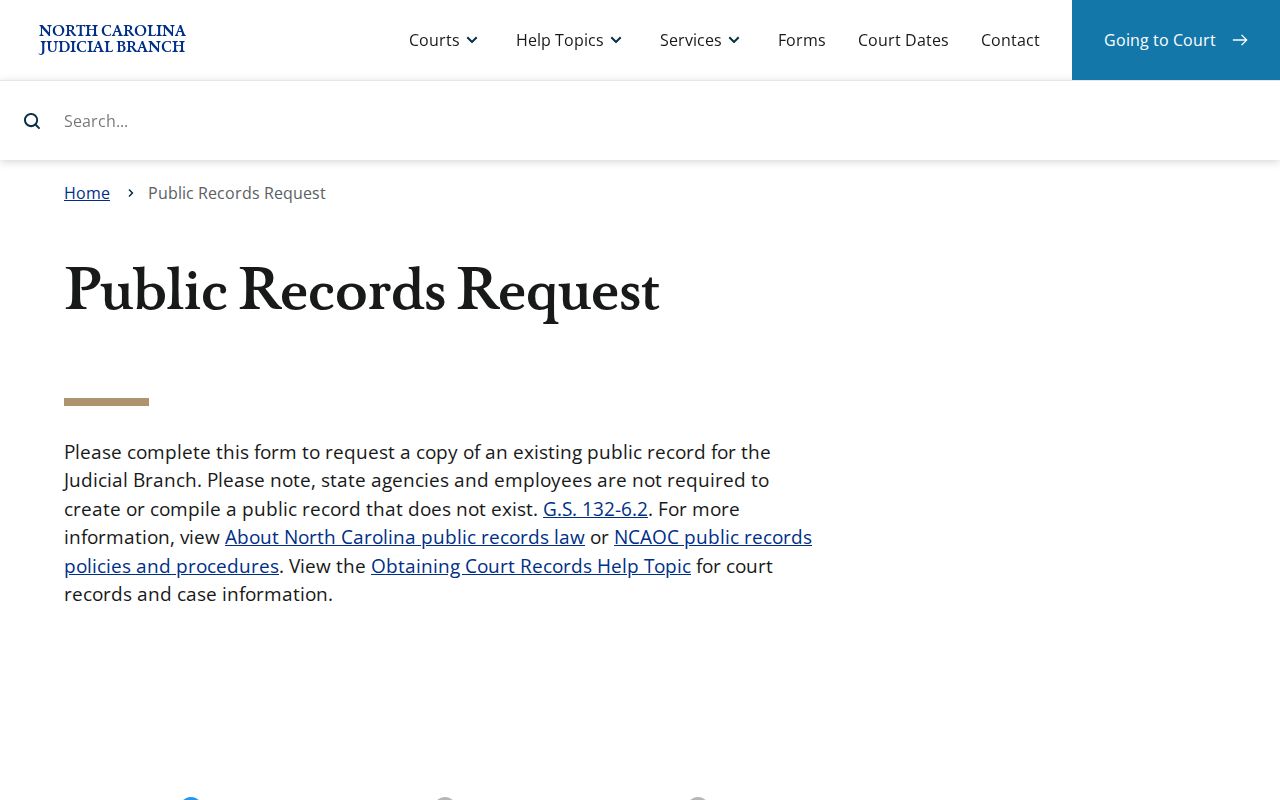
The form works well for agency records NCAOC actually holds. The Cleveland Clerk of Superior Court controls the county case-file route. NCAOC public-records policies and procedures explain the agency's administrative-record process and its copy-cost policy.
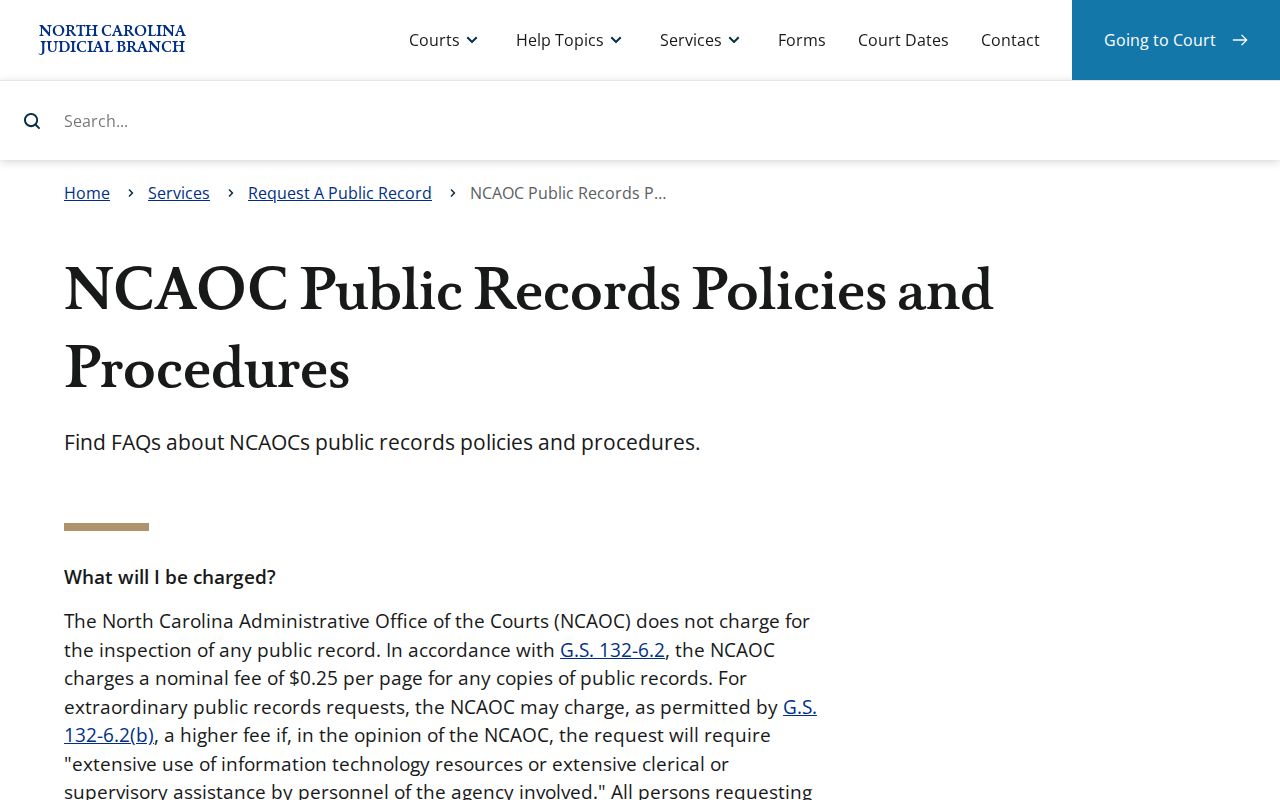
Those policies publish no fee schedule for Cleveland Clerk of Superior Court case records. They also leave custody of local case files exactly where it was, with the county clerk.