
How to Search the Cleveland County Court Docket
Start at the statewide eCourts Portal. Cleveland sits inside the eCourts environment. There is no separate official Cleveland-only docket database to hunt for. Smart Search is the tool. Feed it a case number, a party name, or a business name. A complete case number works best. A name search across the state can pull in records from many counties and muddy the results.
If a name is all you have, apply the advanced filters. Pick Cleveland, then narrow by case category, status, or a filing-date range. Before opening any result, confirm the county and case number match. What you see is called a Case Summary. It can display case information, events, hearings, dispositions, and financial information where available. Treat it as a locator, not a certified copy. Do not assume every filed document is online.
- Open eCourts Portal and choose Smart Search.
- Enter a case number when known, or use a permitted name or business search.
- Apply the Cleveland location filter and other published filters when a result list is broad.
- Check the county, case number, status, and case type before opening a Case Summary.
- Use the clerk’s public terminal or record counter when the needed public item is absent or certification is required.
Cleveland County Case Summary Searches
The Case Summary is the Portal's public docket view, and its layout rewards reading in order. Basic case information comes first, then assignment information, party information, causes of action, Case Events, hearings, dispositions, and financial information where those fields exist. A calendar entry may show a setting, and the Case Events area may show a procedural entry. Neither one is the full text of an order, so resist reading either as a ruling on its own.
The state's Portal training and resources page explains the public system and its search tools. No registration is needed for ordinary public searches. Registered users get a My Cases feature, though signing up does not unlock sealed or confidential material.
For the bigger picture, North Carolina's eCourts overview documents the statewide modernization that put Cleveland's court records on this public route.
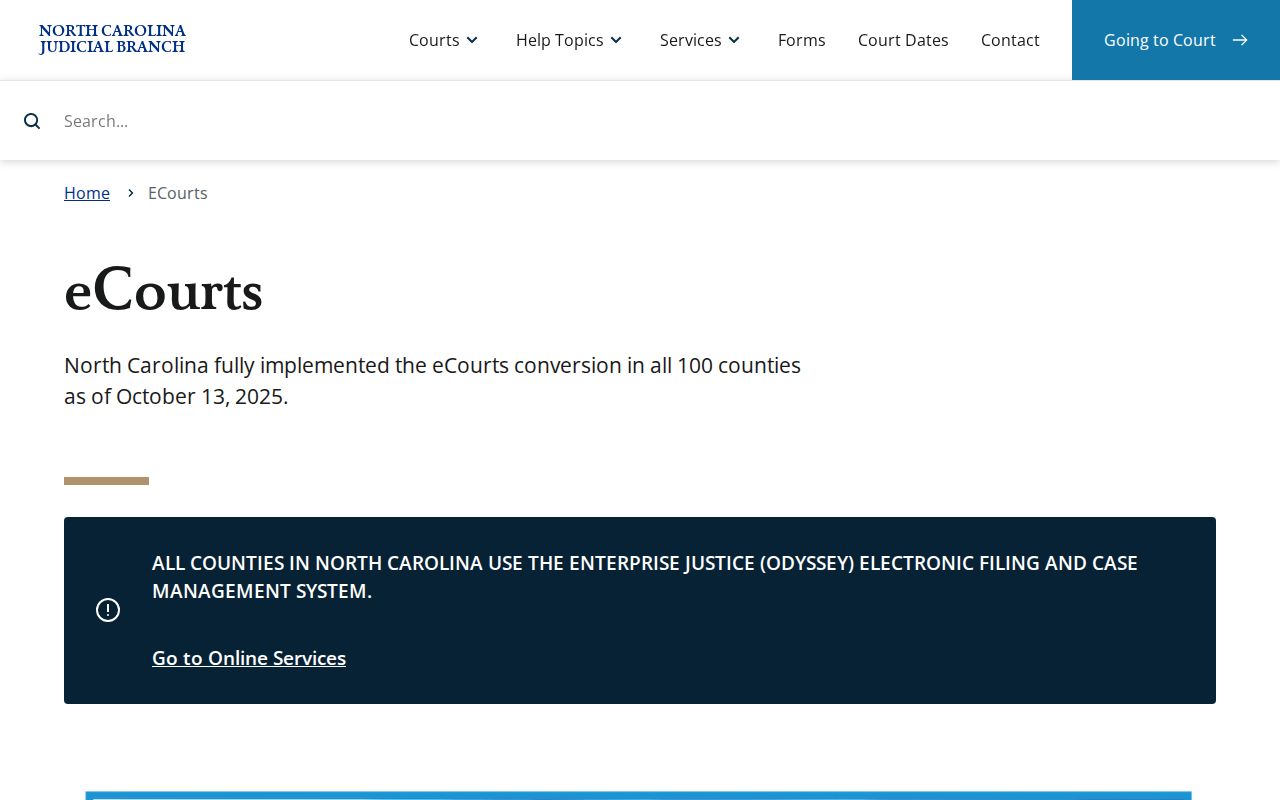
The statewide system is the online entry point for a Cleveland County court docket. Even so, a public Case Summary is not the same thing as the clerk's official file.
What a Court Docket Shows
For a Cleveland case, read the docket through the Portal's Case Summary and Case Events. The docket is a running administrative record. It can identify the case. It can show that a filing or hearing occurred. It can display scheduling information and list an available disposition. It does not hand you every paper or electronic document. And a visible claim or charge is not a finding by the court.
A court calendar does a narrower job. It lists matters expected for a session. It helps you find a date, a courtroom, or an event label. When you need a public document, a certification, or an answer about whether a record can be inspected, the clerk-held case file is the route.
| Case Number | The most precise search key; Cleveland calendar records visibly use the county suffix -220. |
|---|---|
| Case Information | Available identifying details, case type, status, and related data in the Case Summary. |
| Case Events | Recorded procedural activity, such as a filing, hearing, order, or other court action. |
| Hearings | Scheduled date, time, court, and courtroom information when public and available. |
| Disposition | A recorded resolution field when the Portal displays one, not an inference from a calendar listing. |
| Financial Information | Available case financial data; online payment eligibility is a separate, case-specific question. |
Cleveland County Case Number Search
Portal guidance lays out the case-number format. It uses a two-digit year, case-type letters, a six-digit sequence, and a three-digit county identifier. On Cleveland calendar documents the county suffix appears as -220. That suffix is a handy local cue. It is not an invitation to reconstruct a number you do not know. Use the number printed on a citation, notice, calendar, or court paper whenever you can.
Smart Search's published filters cover location or county. They also cover case type, case status, and a filing-date range. Its case categories are Civil Actions, Special Proceedings that are nonconfidential, Estates, and Criminal Actions. For a date question, Search Hearings is a different path. Its criteria can include a case number. They can also include a party or business name, an attorney, a judicial officer, or a courtroom.
| Portal area | Best Cleveland use | Boundary |
|---|---|---|
| Smart Search | Locate a Case Summary by number, name, or business name. | Review county and case number before relying on a match. |
| Advanced filters | Narrow a statewide result to Cleveland and a date, status, or category. | Published guidance does not promise every dropdown value. |
| Search Hearings | Find a scheduled hearing after locating the case. | Virtual status is not shown in published result fields. |
Note: a no-match screen is not a final answer. It can reflect a typo, the county choice, a date filter, a processing delay, or an access restriction.
Which Courts Keep Dockets
North Carolina runs a unified General Court of Justice. One local clerk institution holds Cleveland's ordinary trial-court records. The Cleveland Clerk of Superior Court keeps the records, files, dockets, and indexes. Those cover the county's Superior Court, District Court, and magistrate matters. Cleveland and Lincoln share District 39 for court administration. Still, the county where a case is filed controls its local record route.
The court track tells you where a docket begins. Felonies generally run through Superior Court. Misdemeanors, infractions, traffic matters, family matters, and many civil cases start in District Court. Magistrates handle defined preliminary criminal and small-claims functions. You can narrow the online case search to Cleveland. But the clerk stays the official file route for each local track.
| Court | Docket covers | Where to search |
|---|---|---|
| Superior Court, District 39 | Felonies, jury trials, and civil matters within its jurisdiction. | eCourts Portal, Cleveland calendars, and the Clerk of Superior Court. |
| District Court, District 39 | Misdemeanors, infractions, traffic, family, and qualifying civil cases. | eCourts Portal, Cleveland calendars, and the Clerk of Superior Court. |
| Magistrates | Statutory small claims and preliminary criminal functions. | Portal where available, then the county clerk record channel. |
North Carolina’s court-types reference provides the statewide hierarchy that frames the Cleveland tracks.
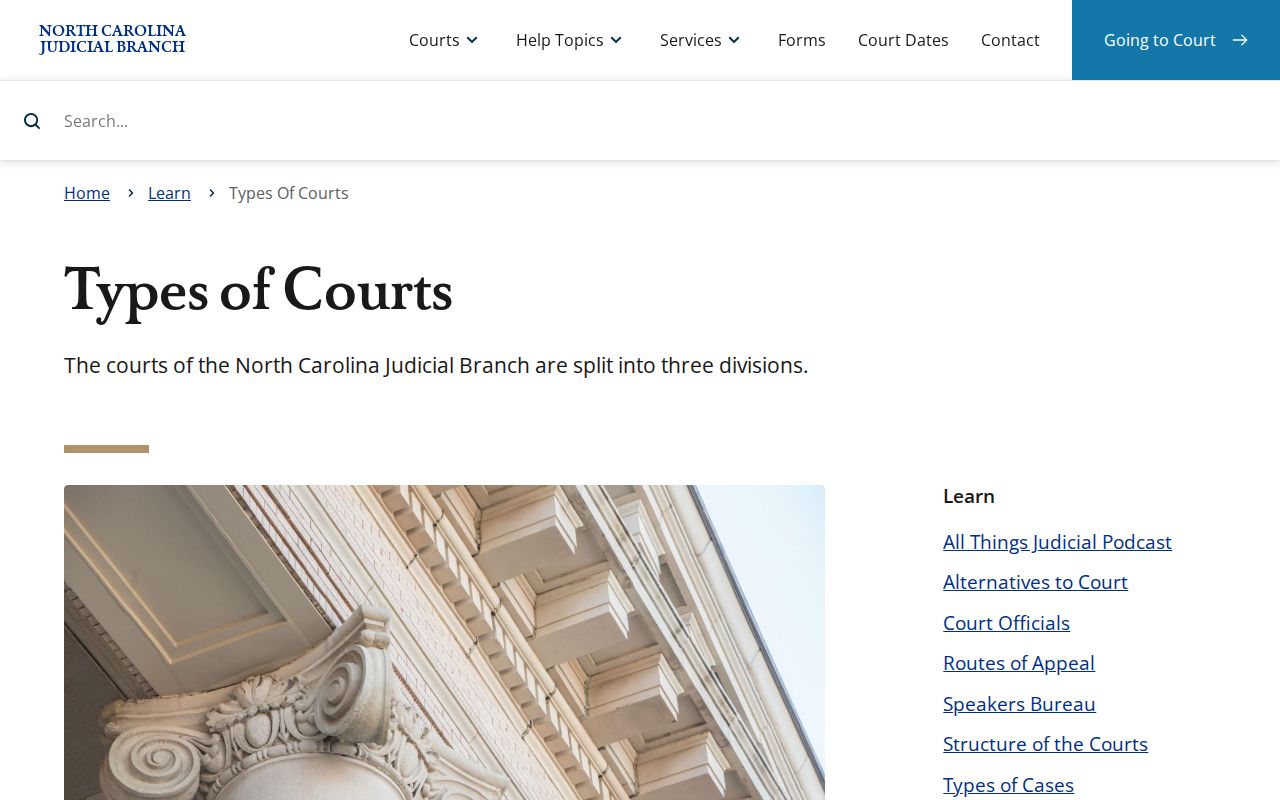
That hierarchy is why a case caption or a city name alone will not identify the court record route.
Cleveland County Court Docket Paths
District 39 has a Trial Court Administrator structure that supports Superior civil settings and motion calendaring for Cleveland and Lincoln counties. Calendar coordination is not docket custody. A coordinator can organize a court working schedule, but the Clerk of Superior Court keeps the official case file and provides signed physical orders or record copies through the clerk process.
The distinction matters when a Portal entry or calendar label leaves you unsure what happened. A setting is not a ruling, and a scheduling office is not the office that certifies the record. For a civil motion or trial setting, the District 39 scheduling context may explain the calendar. A public document request, though, belongs with the clerk. District 39's Trial Court Administrator information describes this regional calendar role.
The official directory is worth a check before you send a record or setting question anywhere. It confirms which local office actually handles it.
Finding Court Dates and Settings
The Judicial Branch posts Cleveland County civil and criminal schedules online. Pick Cleveland. Choose Civil or Criminal, then open the current calendar file for the right court and session. Each result page can show the court, start date, courtroom, case number, and setting details. Treat any calendar as a published schedule. It is not a final outcome.
Portal Search Hearings works better with a known target. Use it when you already have a case, party, courtroom, judicial officer, or attorney in mind. A tight date, a continuance, or a setting that means travel still deserves a call. Contact the clerk or the District 39 coordination channel. Remember that requesting a continuance does not change the date itself. The full Cleveland County court calendar walkthrough covers both online and local confirmation channels.
Cleveland County Calendar Records
Cleveland's calendar service splits civil and criminal results. A civil file can hold a lot. It may list the court, session date and time, courtroom, case number, days from filing, party-side and attorney columns, and an event label. Criminal files add participant columns and a CHARGE label. Those fields help you find a scheduled matter in the court docket. They do not turn a schedule into a ruling on the merits.
Civil labels double as local shorthand. JT marks a jury-trial setting and BT a bench trial. STAT signals a status review, while MTN, MHD, MHDJ, and MHC point to motion-related settings. A setting tells you what the court planned to address. It does not prove the event happened or reveal the result.
- Continuance
- A postponement of a scheduled setting to another date or session.
- Case Event
- A docketed procedural occurrence, such as a filing, hearing, order, or other court action.
- Status Review
- A setting to address a case’s posture, not a disposition of the claims.
The official North Carolina court-calendar selector is the route to Cleveland’s current schedule files.
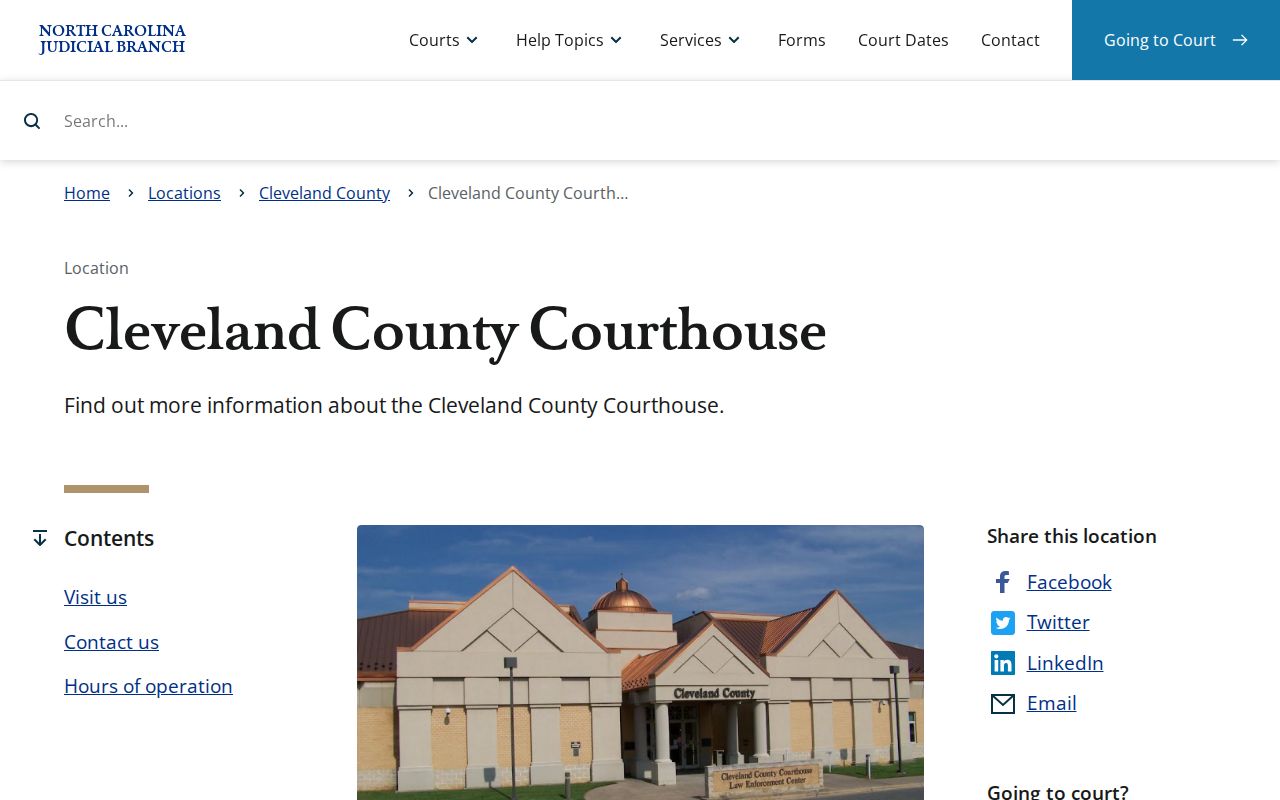
The calendar files come out statewide, but county court administration still runs locally from the Cleveland courthouse. That building is where the docket work actually happens.
Public Access to Dockets
Public access begins with the clerk's record duty. It is not a promise that every case file is downloadable. Cleveland's Clerk of Superior Court keeps the local trial-court dockets and court records. Anyone may inspect them during regular office hours unless a statute or rule limits access. Portal widens the online route to public case information. Yet it neither replaces the clerk's custody nor lifts confidentiality limits.
Key Rules:
G.S. 7A-109 requires the clerk to maintain court records, dockets, files, and indexes, with inspection subject to legal limits.
G.S. 132-6.2 addresses copy media, actual reproduction cost, certification, and large-request service charges.
G.S. 7B-3000 makes juvenile records confidential except as the statute permits.
Cleveland County eCourts Access Limits
Statewide rollout reached all 100 counties on October 13, 2025. Cleveland now sits fully inside the eCourts environment. One system beats a county-by-county patchwork. Still, the online route has real boundaries. Portal guidance states that information and documents upload into Odyssey as processing allows. So not every record appears there. When a document is missing, ask the clerk to check the file. Do not assume it was never filed.
Sealed and confidential records stay closed to every Portal user. Juvenile information, unreturned warrants, and certain protected-order data face added restrictions. A public terminal or clerk counter is not a loophole around those rules. It is the right alternative when a public record exists. Use it when the online view falls short. The Cleveland County judicial district page links to local services, forms, calendars, and clerk information.
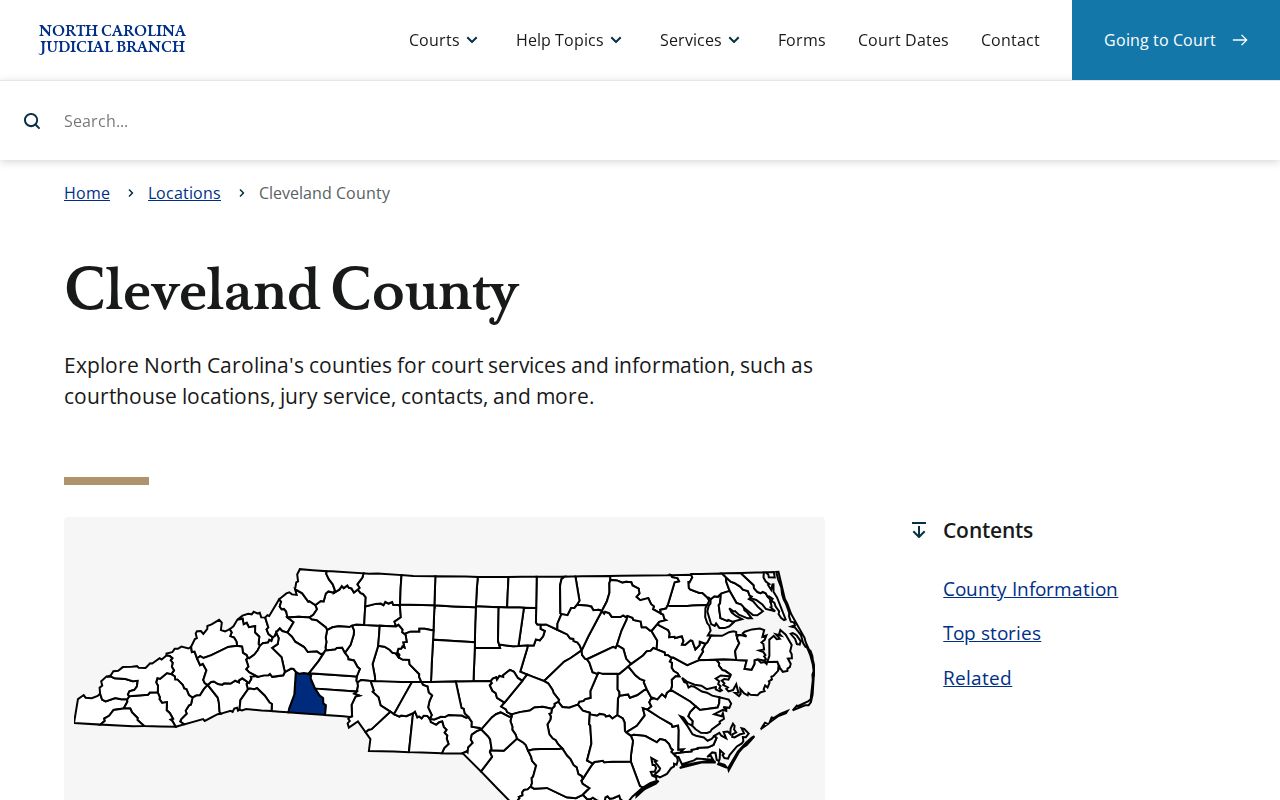
The county landing page pairs statewide searching with local clerk access for Cleveland court records.
Clerk and Docket Records
The clerk's reach is broad. The Cleveland Clerk of Superior Court keeps the case files, dockets, and indexes for Superior Court, District Court, and magistrate matters. Start with the Portal to identify a case and its visible public history. Then turn to the clerk's office. There you get a public terminal, file inspection, an ordinary copy, a certified copy, or an answer the online summary cannot give.
A certified copy and an online printout do different jobs. Certification comes from the clerk when the record and procedure allow it. Ask about availability, turnaround, payment method, and cost first. Do that before requesting a large or certified set.
Cleveland County Clerk of Superior Court
100 Justice Place
Shelby, NC 28150
704-476-7800
North Carolina's court-records instructions separate Portal searching from clerk terminals, copies, certification, transcripts, and audio requests.
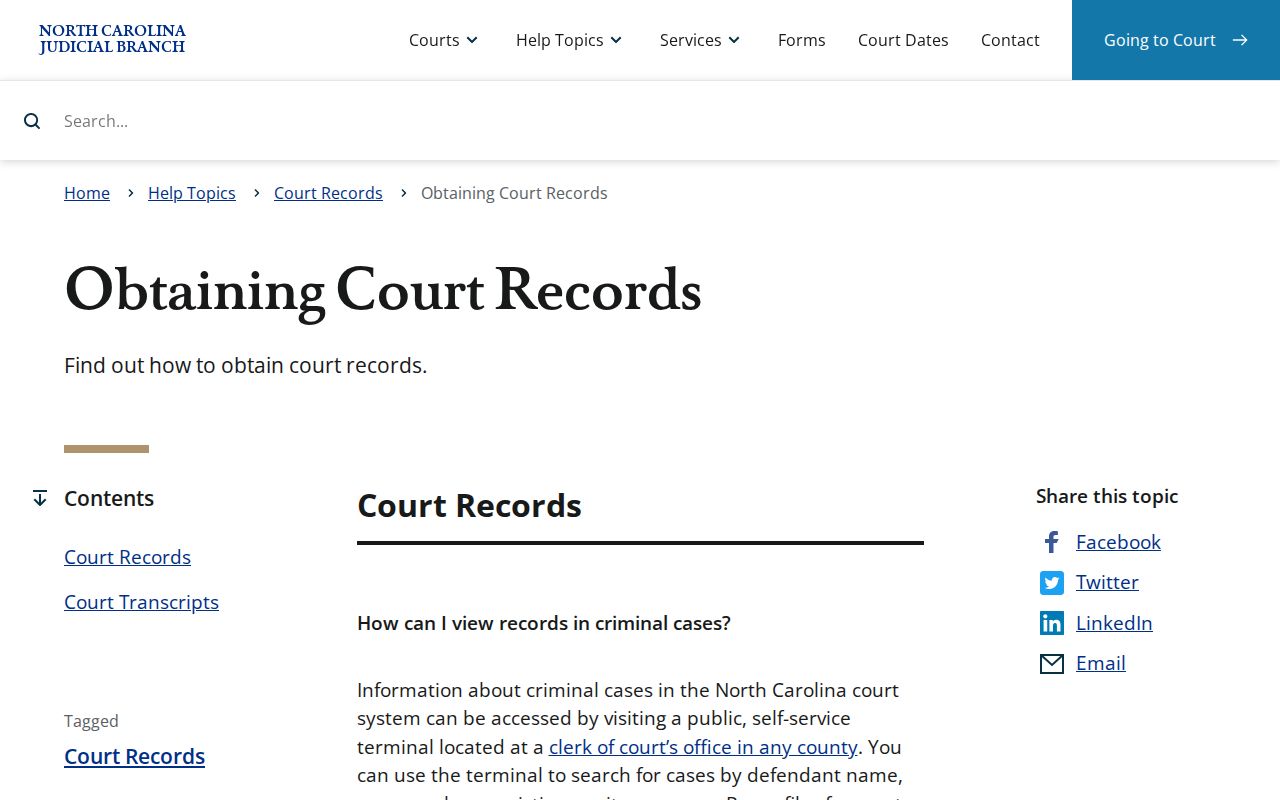
The official records guidance favors targeted requests. Ask for a specific public case item rather than an open-ended request to compile information. That approach gets faster results at the counter.
Cleveland County Clerk Record File
Know the record type before you contact the clerk. A Case Summary is a running index of visible activity. A filed document might be a complaint, answer, motion, affidavit, or order. A certified copy is a clerk-authenticated copy when available. A transcript works differently. It comes through the court reporter or digital-recording process, never from printing the Portal. Details speed the request. Give the office a case number, document type, and date so staff can locate the right public item.
The statewide NCAOC public-record request form serves a different purpose. It covers judicial-branch administrative records held by NCAOC. Its own instructions say NCAOC is not the custodian of local court documents or case information. A Cleveland case-file request belongs with the Cleveland clerk in the county of filing. G.S. 7A-109 states the clerk's duty to maintain Cleveland court dockets, files, and indexes.
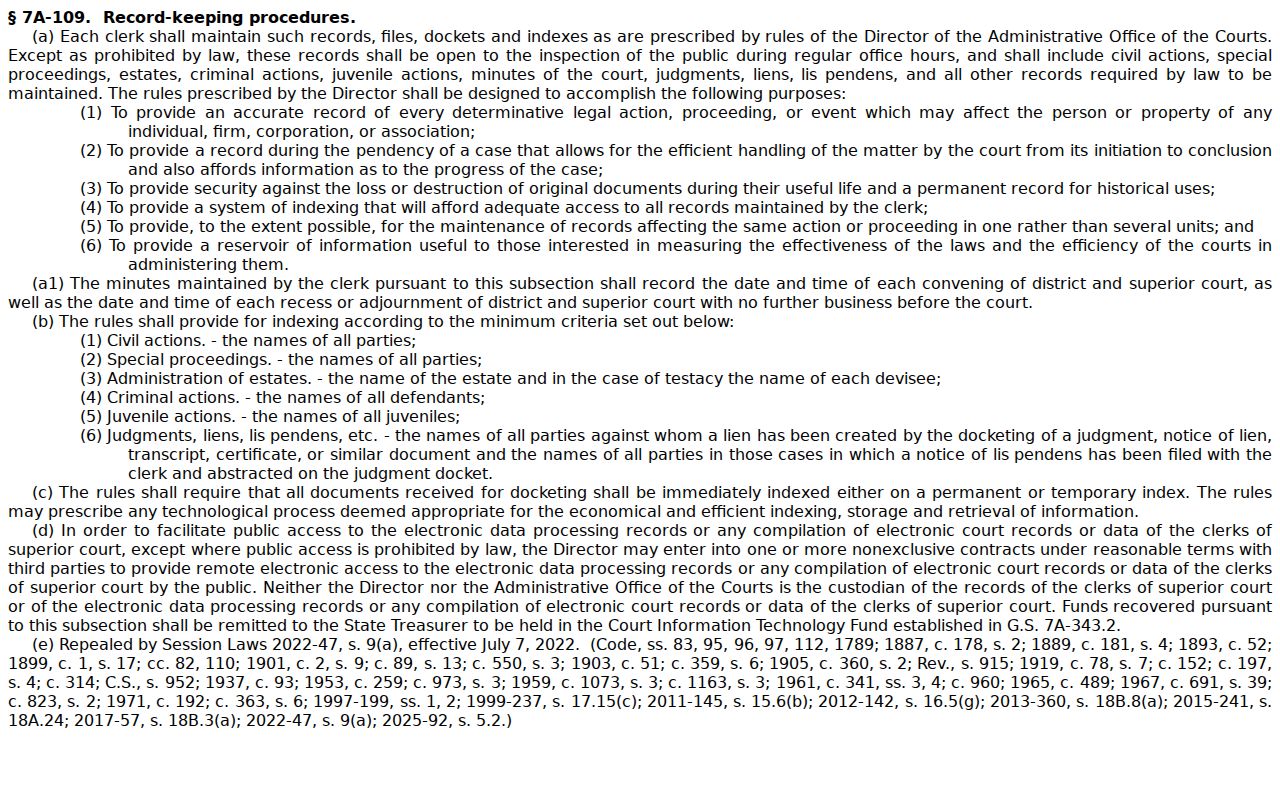
That statutory record role is why a Portal result and a clerk-certified copy should never be treated as the same thing. The clerk holds the official court docket file; the Portal only shows a summary view of it.
Note: Ask the clerk to confirm the public status and applicable charge for a specific record before arranging a visit or payment.
Court Dockets by City in Cleveland County
Cleveland County spreads across 15 municipalities. Yet the public route to a state court docket runs through the county, not through any one town. The five largest communities below share that single system. None of them runs its own official municipal court docket database. A city hall may keep local administrative records. But a state case lives elsewhere: with the Cleveland Clerk, the statewide Portal, or the county civil and criminal calendar files. Kings Mountain sits on a county line. Confirm which county owns the case before you search. One quick check saves a wasted trip through the wrong docket.
Shelby Court Docket
About 22,168 residents · County seat and courthouse location; use Cleveland’s clerk and Portal route.
Kings Mountain Court Docket
About 11,430 residents · Confirm whether a case belongs in Cleveland or Gaston County first.
Boiling Springs Court Docket
About 4,752 residents · Town administration and the county state-court record route are separate.
Belwood Court Docket
About 847 residents · Use Cleveland Portal filters, calendars, and the Shelby clerk for state cases.
Kingstown Court Docket
About 649 residents · Town records and Cleveland state-court case records use different custodians.
Cleveland County City Docket Routes
Shelby hosts the county courthouse. Every state case from Boiling Springs, Belwood, and Kingstown funnels there too. The routine is simple. Pull a Case Summary from the Portal first. Then check the Cleveland calendar files for the hearing date. Ask the Shelby clerk only when you need a public file or a certified copy.
Kings Mountain is different. The city straddles the Cleveland and Gaston county line. Its name alone tells you nothing about which court holds the record. Look at the charging county on the citation, the filing county, or the case number before you pick a clerk or set a search filter. That one step keeps a Cleveland County docket search from chasing a case filed in Gaston. The Cleveland County community overview lays out the municipalities served by this one-courthouse record system.
The county’s municipal network does not create separate state-court docket custodians for each city.
Map and Directions to the Cleveland County Courthouse
The Cleveland County Clerk of Superior Court keeps Superior Court, District Court, and magistrate case files, dockets, and indexes at the Cleveland County Courthouse, 100 Justice Place, in Shelby, the county seat. The same building houses the Superior and District judges' offices, the District Attorney, and the magistrate office, making it the county's single in-person stop for a records visit, a scheduled hearing, or a payment.
Cleveland County Courthouse
100 Justice Place
Shelby, NC 28150
704-476-7800
Monday through Friday, 8:30 a.m. to 5:00 p.m.
Cleveland's jury guidance identifies public parking at the courthouse and accessible spaces across the street, and it specifically warns visitors not to use the nearby private lot. The magistrate office, 704-476-7819, has an after-hours line at 704-480-2892 for matters that arise outside the clerk's weekday hours.